


Fig. 6
Download original image
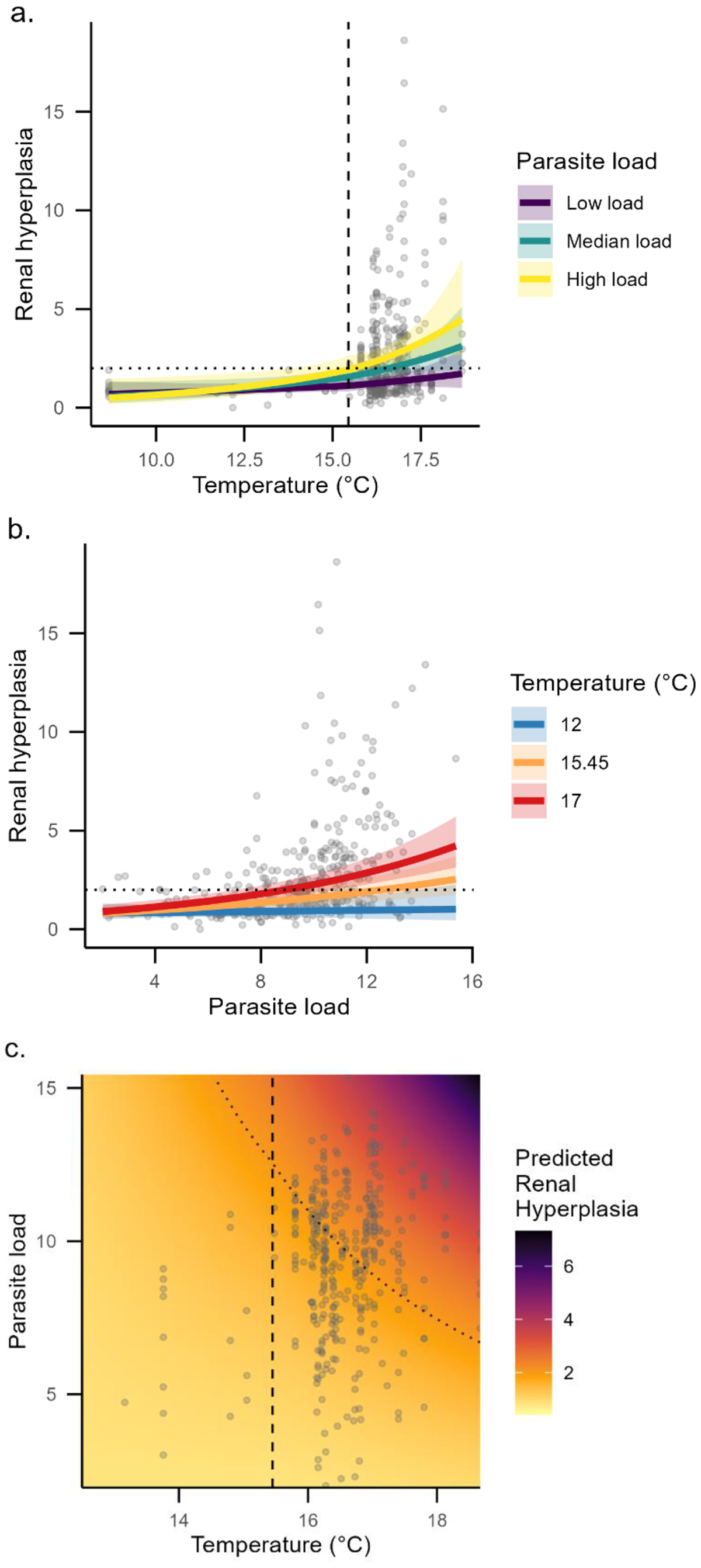
Plots showing a. Predicted renal hyperplasia increases with temperature, with steeper responses at higher parasite loads, indicating that warming disproportionately amplifies pathology in heavily infected fish. b. Predicted renal hyperplasia increases with parasite load, and this effect strengthens at higher temperatures, while remaining weak under cooler conditions (no PKD symptoms). c. The interaction surface shows that the highest predicted renal hyperplasia occurs where elevated temperatures and high parasite loads coincide; the original data points are shown in grey. Ribbons in a, b represent a 95% confidence interval and across all panels, the dashed line resembles the temperature threshold, and the dotted line resembles the threshold for PKD.
Current usage metrics show cumulative count of Article Views (full-text article views including HTML views, PDF and ePub downloads, according to the available data) and Abstracts Views on Vision4Press platform.
Data correspond to usage on the plateform after 2015. The current usage metrics is available 48-96 hours after online publication and is updated daily on week days.
Initial download of the metrics may take a while.